Prospect delegation makes strong impact at TUC Cymru Congress 2026
Prospect members played a full and active role at this year’s TUC Cymru Congress in Llandudno in May, helping to shape debate, influence policy and represent members’ priorities on a national stage.
Our delegation ensured a strong presence throughout an extremely busy and engaging Congress, made up of:
- Jane Lancastle Assistant Secretary
- Sarah Everson Negotiations Executive
- Sian Gale Bectu Skills & Development Officer
- Richard Fraser-Williams Prospect rep
- Carwyn Donovan Negotiations Officer (observer)
- Joanna Harley Prospect rep (observer)
- Ellie King Prospect rep (observer)
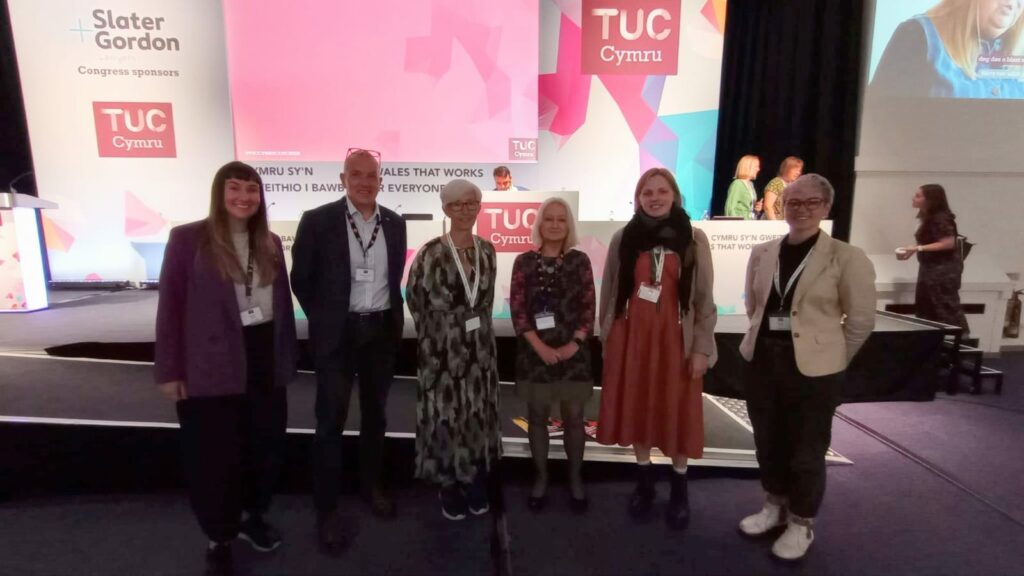
Prospect delegation at TUC Cymru Conference
Success in the Main Hall
- We were proud to successfully move all three of our submitted motions:
- Short-Term Funding and Delayed Government Decisions
- Science Funding and UK Resilience
- The North Wales Economy and Wylfa SMR
We also seconded and supported a range of important motions, including:
- Fair work for freelancers
- National Library of Wales pension changes
- Devolution of water: protecting workers’ rights during Welsh water sector reform
- Unions, bilingualism and opportunities for workers to learn Cymraeg
In her capacity as General Council (GC) member, Jane offered Congress GC clarification on several motions.
Key issues shaping Wales
Congress brought forward some of the most pressing challenges facing workers in Wales today, including:
- Public sector funding pressures
- Workforce wellbeing and workload
- Health and safety risks
- The future of work and technology
Read more: Prif Weinidog Rhun ap Iorwerth MS addresses TUC Cymru Congress
Learning and sharing at fringe events
Delegates and observers attended a wide range of fringe events, ensuring full coverage of discussions shaping the union movement.
Fringe sessions included:
- Trade unions and wellbeing: highlighting new powers for unions to shape public sector priorities under Welsh legislation
- Education reform: focusing on funding, workload and leadership wellbeing
- Workplace safety: addressing asbestos risks, rising violence and the importance of strong organising
- The shorter working week: exploring how AI and productivity gains could support better work-life balance without loss of pay
- Far-right elected: what next? This session brought together young workers from Wales and Germany to discuss the rise of far-right movements and the role of trade unions in responding, this included our Prospect rep Jonna Harley. It highlighted the importance of international solidarity, youth engagement and effective organising strategies to counter division, alongside the need for greater diversity, political education and awareness of unions among younger workers.
- The Angry Summer Project: This session used theatre and music to highlight the legacy of the 1926 miners’ strike, showing how art can bring historical struggles to life, connect with modern audiences and reinforce the ongoing importance of workers’ voices and solidarity.
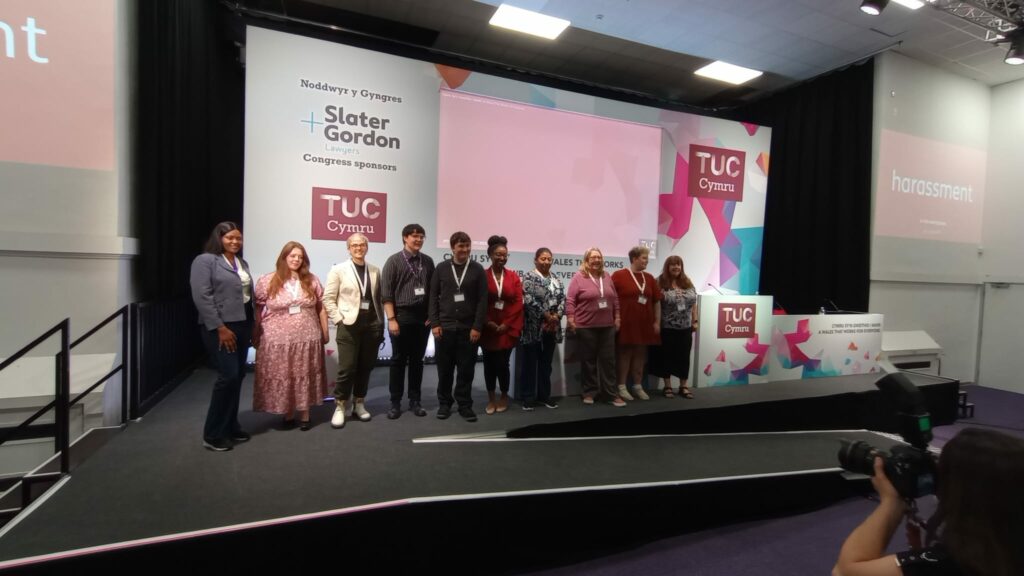
Members of the TUC Young Activists Program
Voices from Congress
One of the strongest aspects of Congress this year was hearing directly from those involved, both experienced delegates and newer reps, reflecting the breadth of perspectives within our union.
Richard Fraser-Williams spoke about the pride and responsibility of representing members at Congress, particularly when moving a motion:
“I found the experience inspiring, to be honest. It was a privilege to deliver a motion on behalf of my colleagues.”
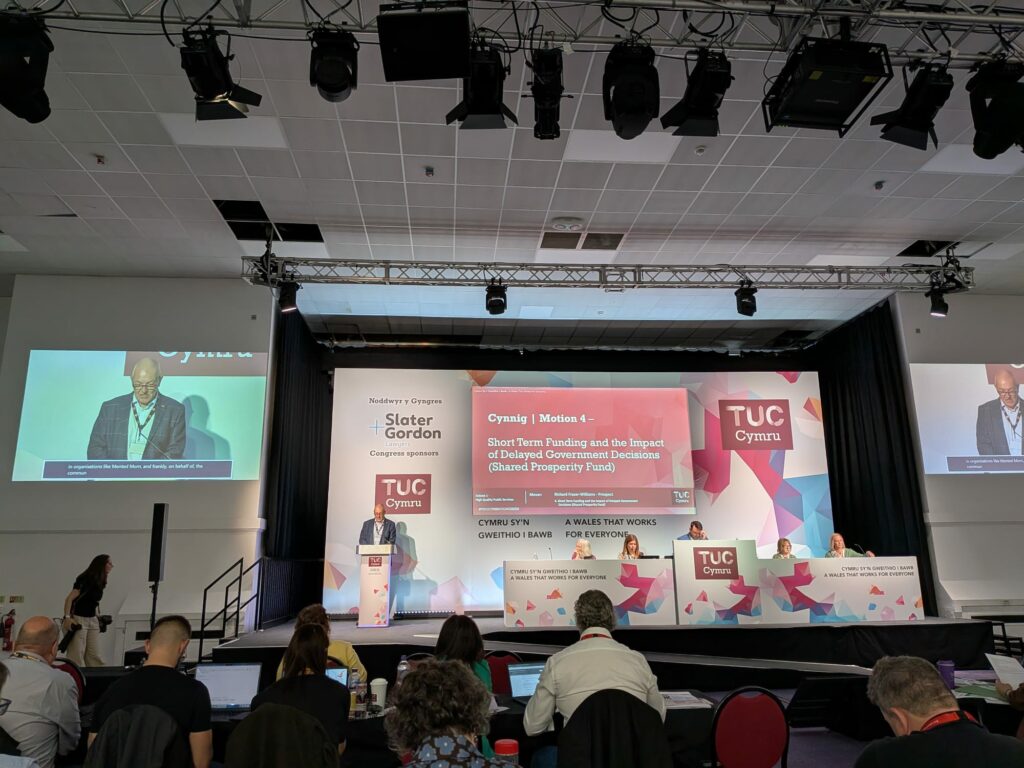 Prospect Delegate Richard Faser-Williams moving Motion 4
Richard highlighted how hearing debates unfold in the main hall brought motions to life, particularly those directly relevant to our workplaces. He also reflected on the strength of contributions from across the movement, noting the impact of speakers who brought both passion and clarity to complex issues. His standout motions were Public contracts only for organisations that recognise a trade union, and Unions, bilingualism and opportunities for workers to learn Cymraeg (composited).
Alongside the positives, he also offered an honest reflection on some of the challenges within Congress spaces, including how discussions can sometimes be dominated by larger unions or stronger voices. Despite this, he described fringe sessions, particularly those focused on safety and wellbeing, as valuable opportunities to learn and connect issues back to workplace realities.
For Ellie King, attending as a first-time observer provided a completely new perspective on the union movement:
“I was amazed by the care, knowledge and passion shown by everyone involved—whether in debates, fringe sessions or conversations between delegates.”
Ellie described how attending Congress helped her better understand not just how decisions are made, but why collective discussion and debate matter. As a new rep, the experience gave her the space to learn without pressure, while still feeling included and supported.
Bringing her professional perspective as a librarian, Ellie also made a unique contribution, collecting an extensive range of campaign materials from across Congress:
“These have now been given to the Welsh Political Archive, which is housed at the National Library and run by longtime Prospect rep Rob Phillips. The archive collects political and campaign material from across Wales, and I was proud to help ensure that the union movement is strongly represented within that.”
These materials will help preserve the history and impact of trade union campaigning for future generations.
Ellie also reflected on the personal impact of attending:
“Attending Congress gave me the confidence I needed to understand the value of individual and collective voices in the union movement, as well as the practicalities of union gatherings, and I’ll be taking that with me as a full delegate to the Prospect National Conference in Brighton this year. I would encourage all reps, but especially new and younger ones, to attend union conferences. I felt supported, inspired, and surrounded by solidarity.”
Joanna Harley offered a deeper reflection on the journey behind one of Prospect’s key motions on science funding, emphasising how member-led campaigning translates into national influence.
Joanna described how concerns raised by members across research organisations grew into a union priority, eventually becoming a motion brought to Congress:
“It started with members in multiple research organisations collectively raising the alarm over issues with science funding with their union, Prospect. Prospect took this as a priority which partly resulted in the national resilience paper and the Science Funding Campaign which was parked following further political and financial changes. At UKCEH, members voted on maintaining pressure on this campaign, so we submitted a motion for Prospect to bring to TUC Cymru, in anticipation of rising pressures on the environmental sector, which could be worse following the Senedd election.”
Joanna also reflected on the broader political context of Congress, including the role TUC Cymru plays in influencing Welsh Government policy and campaigning on devolved issues.
Attending fringe sessions added another valuable dimension to their experience, particularly discussions around the shorter working week and term-time only pay.
Reflecting on the role of technology, “If AI really does increase productivity, with employers benefiting, then why should the workers need to take on more work? The profits could be used to give us more free time and a better quality of life, which in turn improves retention, efficiency and staff morale.”
The session on term-time only pay was especially powerful. “Activists from the campaign regaled their experiences of working multiple jobs to cover the absence of school holiday pay, not being paid for residential school trips, covering classes and providing care service for the most vulnerable children, amongst many tasks outside their job description.”
This discussion served as a stark reminder of the importance of union organising and the need to challenge inequality in the workplace.
Marking milestones and looking ahead
This year’s Congress marked Sian Gale’s final time officiating as TUC Cymru Vice President, an important moment to recognise her contribution.
We are also delighted to congratulate Sarah Everson on her election to the TUC Cymru General Council.
The power of collective action
TUC Cymru Congress 2026 showed exactly what can be achieved when unions come together. From influencing Welsh Government priorities to driving campaigns for fairer workplaces, the message was clear: Collective action works and Prospect members are at the heart of it.